Help / FAQ
Click buy next to any title you want to add to your shopping basket.
Burning Shed CDRs
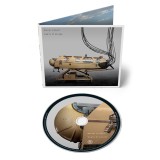
Burning Shed CDRs are burnt to order and packaged in a stylish rubber stamped cardboard sleeve with card inlay.
|
andrew keeling - blue dawn
'Blue Dawn' is the latest collection by acclaimed British composer, Andrew Keeling.
Andrew's second release on Burning Shed (following 'Reclaiming Eros'), 'Blue Dawn' represents the more meditative and spiritual side of Andrew's work and includes performances by Holland's 3-Orm, Scottish-based ensemble TripleSec, theorboist Matthew Wadsworth and pianist Steven Wray.
A piece from 1992, 'Distant Skies, Mountains and Shadows', is placed alongside more recent works: 'Mirare for theorbo', 'Petit Requiem pour Basil' for narrator, flute and piano and 'Blue Dawn' for solo piano.
Tracks
1. Distant Skies, Mountains and Shadows (10:22)
2. Mirare (15:00)
3. Petit Requiem pour Basil (11:33)
4. Blue Dawn (31:16)
Credits
1. 3-Orm
2. Matthew Wadsworth
3. TripleSec
4. Steven Wray
Notes
“Follow nature!” cries Paracelsus in the notes for Blue Dawn, advice which Andrew Keeling has acted upon for several years. Going against the prevailing direction, his writing has been steering a path from egg-headed complexities associated with much of the clatter of the contemporary classical scene, to a pared-back approach unconcerned with knotty grandstanding or intertextual SFX.
Opening with a single attention-gathering piano note, “Distant Skies, Mountains And Shadows” delicately unfurls into the ruminative ambience of the Kerzo Chapel in The Hague. The particular pathway Keeling charts for the piano flute and clarinet of the Het Trio maybe angled and occasionally steep, but throughout the piece radiates lyrical warmth.
However the real heart of the album is to be found in “Blue Dawn”. Written between 2005/6 it consists of seven solo piano pieces touchingly played by Steven Wray. Though each is individually titled they work best when listened to in one sitting.
Occupying the hushed spaces from which Pärt’s “Für Alina” resonates, the themes gently see-saw between light and dark, between hope and fear, constructing a solemn reverie from starkly-drawn materials. Yet the effect of these halting, sensitive movements is anything but austere or simple. Over the course of a half hour, “Blue Dawn” creates a soundtrack to haunting dreams that touch upon the losses we experience and the gains which may be found arising from them.
The dawn of a new day can be viewed as a mere set of physical reactions within the natural world, or something, despite its repetition, that is resplendently unique. With a luminous clarity, Keeling probes for that startling, fresh beauty residing within the mundane, and which leaves us breathless when we find it. Magnificent.
Review by Sid Smith
Burning Shed CDRs
Burning Shed CDRs are burnt to order and packaged in a stylish rubber stamped cardboard sleeve with card inlay.
Reviews
Andrew Keeling’s second release on Burning Shed, Blue Dawn represents, as the website has it, the more meditative and spiritual side of Andrew’s work. From 1992, Distant Skies, Mountains and Shadows is the eldest work on either of these discs by quite a long way. The piece was originally written for ‘Het Trio’, the famous Dutch flute/bass-clarinet/piano combo who took it on tour and broadcast it on BBC Radio 3. This was the trio whose repertoire we in the alas now defunct 3-Orm were desperately trying not to duplicate. We recorded it in a ‘Chapel’ space behind the Korzo Theatre in The Hague, now used as a ballet rehearsal room and fortunate enough to have a decent piano. The horrendous amount of resonance actually suits this atmospheric music quite well, and aside from having to sit around and wait while the chimes of the Grote Kerk over the road finished every quarter of an hour, it was a nice place to work and at least isolated from most of the traffic noise. The extra ‘live’ sounds mostly come from the nearby theatre and offices, and the floor, especially designed to be easy on dancers’ feet but the curse of our wonderful sound engineer Rick van der Mieden. I don’t want to give the impression of a carnival of squeaks, slamming doors and jingling keys: it’s actually not that bad, but it does bring back traumatic memories. For those interested, the unusual sounding flute is a bass flute, while the clarinettist plays bass clarinet as well as the more common Bb instrument. In this piece the title makes a clear case for what you might expect from the music.
MirAre which follows, is cut at a higher level; so the solo theorbo blows 3-Orm away fair and square. Much longer than a lute, and with considerable bass wallop by comparison, the theorbo has plenty of dynamic punch, while remaining a softer instrument than this recording might lead you to believe. Like Black Sun, the piece is rich with ideas and effectively idiomatic writing for the instrument, and should provide pickings for players willing to move beyond the 17th century. It impressively received its première in the Wigmore Hall, London.
Petit Requiem pour Basil is for narrator, flute and piano, and is about the death of one of narrator Rosalind Rawnsley’s esteemed colleagues. The news of this event arrived when the composer was staying with Rosalind and her husband, and the work is a direct response to this devastating moment. The ‘live’ recording of Scottish-based ensemble TripleSec has a slightly home-made feel, but the playing and delivery is heartfelt, even though the music is not always entirely in the nature of a lament. The text is in French, so for a poor cultural barbarian such as myself it is not always easy to know what it’s all about. That said, the quotation from Fauré’s Requiem and the mood and intent of other passages are all clear enough.
The one remaining work on this disc is a 30 minute cycle for piano called Blue Dawn. The first movement of this, Caela, was written for a charity event at St. Martin-in the-Fields in London and performed there by Steven Wray. He has has premiered several of the composer’s other pieces, and will be including Keeling’s works Pneuma and Tjarn on his own soon to be released CD. Like Distant Skies …there is plenty of pleasantly static, atmospheric writing here, but I found myself struggling a little against my own associations with composers like Satie, Debussy, Gurdjieff, and even the kind of atmosphere conjured up by something like Morton Feldman’s Rothko Chapel. Rather than allow my initial preconceptions and literary stumbling around to spoil things, I asked Andrew to provide some comment, and he very kindly wrote back. The titles referred to are the seven movements in the piece, though not described in order of performance:
“There’s a history to these pieces. While I was on holiday in Slovenia in 2003 I had this dream: Walking through a graveyard. Someone has just died and the newly-dug grave has hundreds of roses on it. Wotan is walking with me - long grey coat and large grey felt hat. I can see the first light of dawn through a Baroque archway some way ahead. Just after that I heard a voice, in a dream, say Caela to me. I looked up the word which means ‘out of the forest.’ Next to be written was Kindertotenlied after I’d had a dream about an old man’s daughter who was dying. Then, after a walk to Top Withens on Haworth Moor some days before my mother-in-law’s death (and reading Sylvia Plath’s poem ‘Two views of Withens’); The House of Eros. Then Mana (a Jungian term); then Resurgam (after J.O.) (I heard the Offenbach piece, which is quoted in it, played at my mother-in-law’s funeral (The word Resurgam was on the altar of the crematorium). Then Hymn: Blue Dawn. I thought it was finished, but then, one Saturday afternoon some time after I sat at the piano and wrote Forget-me-Not. It was really the postscript.
I felt the Blue Dawn pieces were the turning point in my music. It seems like the Blue Dawn CD is the end of a cycle and the beginning of another which has just started with two new pieces: Maximon for soprano sax & piano (Maximon is the Guatemalan god of procreation and healing); and Scry for guitar quartet. Scry, as you’ll probably know, is occult terminology for looking into the future.”
Blue Dawn is one of those pieces in which you have to go beyond the superficial, and look properly into the ‘what’ and ‘why’ of both the music, and one’s own response to it. At first I felt it was missing a personal element, the fingerprint of the composer less visible through economy of means, tintinnabular harmonies and widely-spaced notes. You might indeed find it to be a bit too close to the middle of the road at first: eyes wide-open and clear, but seeing no further than the bright lights of an oncoming juggernaut stacked with soft duvets. I however found it useful to come back to it after a day or so, and found that it had been beavering away unconsciously at the soft, slushy, stupid part of my lazy musical brain and had made a little home, becoming established as something rather rich and strange.
I am very grateful to Andrew Keeling for supplying the discs for this review, and for his helpful comments. I’m also proud to have been able to contribute to one of the tracks, and look forward to seeing what this fascinating composer will come up with next.
Dominy Clements, Musicweb International
|
Your Country
You have selected:
Lithuania
Downloads
Sign in here to begin downloading.
Burning Shed Samplers
Sampler three included free with any label purchase.
|